Echoes from the Soil
- Category
- Art Work
- Year
- 2025
- Development
- Exhibition
In 2024, photographer Tamaki Yoshida was awarded the Ruinart Japan Award and undertook a residency at Ruinart, the historic champagne house in Reims, France. This project began as an inquiry into the memory embedded within the natural landscape of Champagne.
Beneath the vineyards, layers of limestone strata have accumulated over millennia, storing minerals and time itself. The deep roots of the vines extend into this reservoir, carrying the imprints of the past forward into new life. Observing this landscape, Yoshida came to see the soil not merely as matter, but as a vessel of memory—a layered archive of transformation and continuity.
“Does a photograph truly fix the past in place? Or does it shift in meaning, resonating anew as time unfolds?”
Her reflections deepened through an encounter at a fossil excavation site, where she saw traces of life from millions of years ago preserved in stone, waiting to be unearthed by a future gaze. She began to perceive photography in a similar way—images, too, can be buried in time, only to resurface and be rediscovered. In response, she expanded her practice beyond the act of photographing: she buried her images in the soil of Champagne itself.
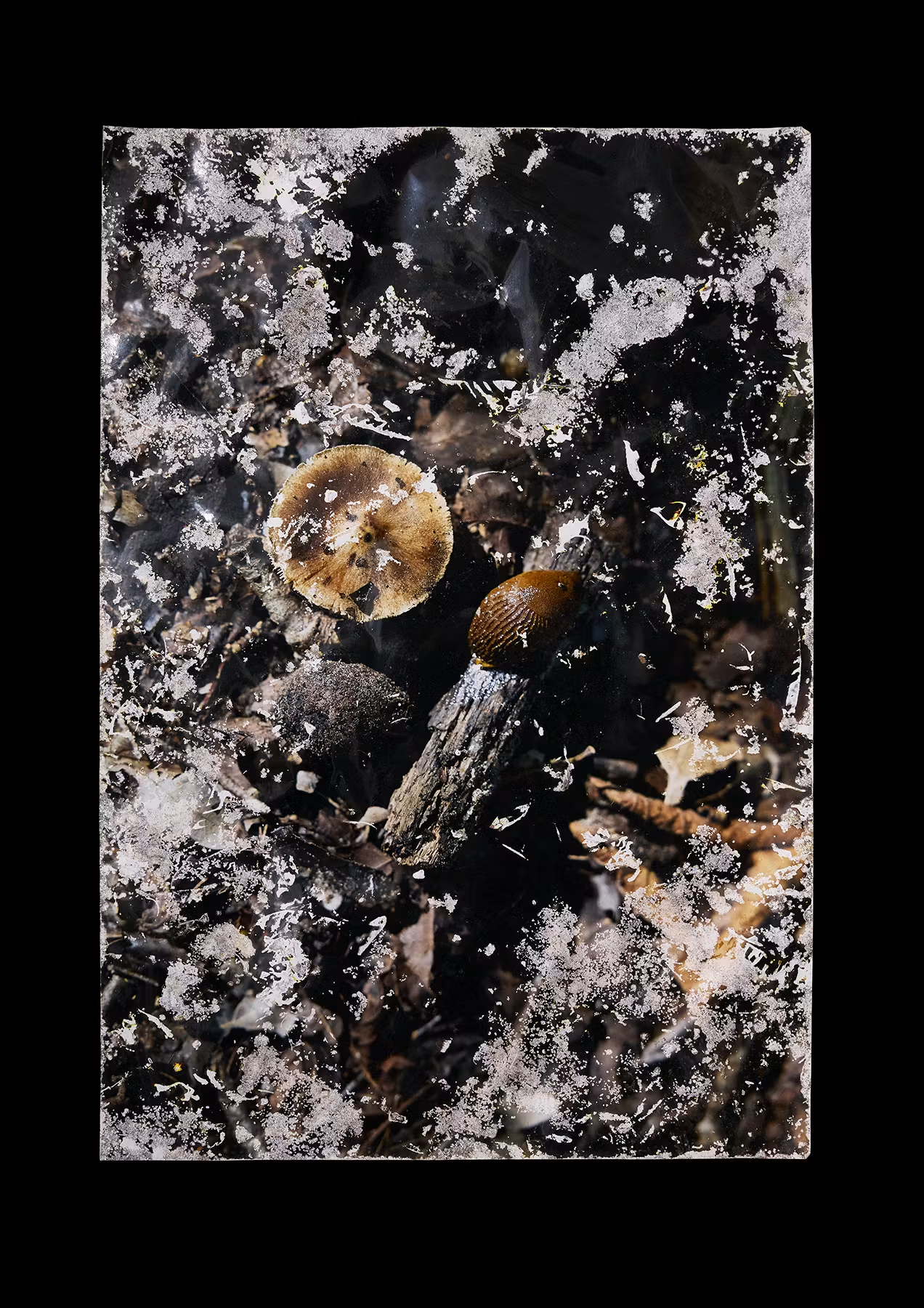
Decomposing leaves, slugs and fungi, earth dissolving into itself, and the lifeless body of a bird found by the roadside—these elements were placed within the Room of Soil, where they rest beneath the floor, merging with unseen layers of time. Their presence, though buried, quietly rises to the surface.
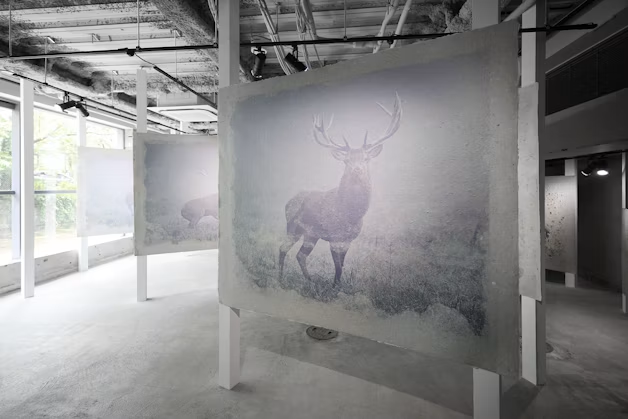
Gradually, Yoshida’s gaze turned toward the unseen rhythms of life and death, beyond the reach of human hands. She listened to the distant calls of deer echoing from the depths of the forest, their presence sensed but never seen—until, as her time in Champagne neared its end, one finally emerged before her eyes. The vitality of its form, together with the flight of birds overhead, became central to the Room of Regeneration. Here, Yoshida sealed these images, along with elements from the land itself, into hand-pulled washi paper, embedding time within its fibers. The works are arranged to embody the ceaseless movement of life—rising from the earth, dissolving into it, and returning once more.
Echoes from the Soil is an exploration of photography beyond its conventional role as a static record. Seeking to heighten the purity of seeing, Yoshida engages in a dialogue between images, space, and time, asking how memory, held within the earth, continues to reverberate into the future.
Text: Yumi Goto
From KYOTOGRAPHIE2025 official website
Artist Statement
This work was created during an artist residency with the champagne house Ruinart.
All living things—animals and plants alike—ultimately return to the soil.
Within that natural cycle, I turned my attention to the memories and layers of time held by the earth.
In the Champagne region, soil pollution caused by herbicides used in the past remains a serious issue. Today, herbicides are no longer used, and efforts are being made to transition toward more sustainable agriculture. Rather than cultivating a single crop, the land is now planted with a diverse range of flora, encouraging biodiversity and creating richer soil.
When I dug into the soil of Ruinart’s vineyards, I found various types of waste mixed in. This traces back to a time—up until around the 1960s—when it was common practice to dispose of household waste in the fields. Ruinart is now working to regenerate the ecosystem, embracing even these remnants of the past. I interpreted this approach as a cycle of “death and regeneration of the soil.”
Another defining feature of the region is its deep bedrock of limestone, formed from ancient layers of marine organisms. During my stay, I visited a fossil excavation site, where fossilized shells emerged from the ground in such pristine condition, it was as if they had only just been buried. I was struck by how the passage of time—undoubtedly etched into those remains—felt somehow blurred. “Something that once lived, now appearing before us”—it reminded me of photography itself.
Inspired by this realization, I decided to bury photographs I had taken in Champagne—representing the “now”—in the soil, then excavate them after a period of time. This act, unfolding in the future yet experienced in the moment, echoed the long aging process of champagne, which is bottled and left to rest in underground limestone cellars for years, sometimes decades. It also resonated with the process of excavating fossils—bringing back to light something from the past. In both cases, I sensed an act of embracing death and breathing new life into it.
On the first day of my stay, a fox suddenly appeared. It emerged from the roadside and vanished into the thicket in an instant—but the graceful movement of its tail left a deep impression on me. That fleeting encounter became a symbol of life born from rich soil. I was determined to see the fox again and photograph it. When I spoke with a local hunter, I learned about the red deer that roam the forests during that season. Because their antlers shed and regrow each year, deer have long been regarded as symbols of death and rebirth in many cultures.
Thus began my search for the fox and the red deer. Despite days of unsuccessful attempts, on the very last day of my stay—just as time was running out—a single stag appeared silently in the dense white fog. It was a miraculous moment.
I juxtaposed the prints I had buried—symbols of “death”—with the rich forms of life I encountered in Champagne, including the stag. I embedded these images, along with the many memories the land of Champagne has held over time, into Japanese washi paper. To me, this embodies the very essence of the “life” that this land has nurtured.
※ The excavated prints were cleaned locally before export, and appropriate quarantine procedures were followed for both transportation and exhibition.
LINK:KYOTOGRAPHIE 2025