HIMIZU
- Category
- Art Work
- Year
- 2024
- Development
- Exhibition
This project focuses on the deaths of living creatures that have been struck by vehicles and left abandoned on the roadside.
Roads, intricately woven like blood vessels, have brought us countless benefits, energizing our society, economy, and daily lives in myriad ways. These roads also carry countless climbers and tourists to the foothills of Mount Fuji.
The lives that flourish in the embrace of Mount Fuji, in their natural course, would have ended upon the soil of their homeland, becoming part of the earth and nourishing other living beings. However, alongside human activity, countless deaths of non-human creatures also occur. I believe that by confronting this often-overlooked darkness, we can better understand our own way of life.
In the foothills of Mount Fuji, particularly in Fujiyoshida City, an average of 130 animal carcasses are collected annually following reports from the public (this figure does not account for all roadkill incidents in the region). When considering cases where animals retreat into the undergrowth and perish after colliding with vehicles, are preyed upon or carried away by other creatures, or are too small or displaced too far to be discovered, the actual number is estimated to be three to four times higher.
From my own experiences witnessing deer and small animals crossing roads, as well as encountering roadkill such as snakes and deer, I developed this project with the cooperation of the NPO Fujisan Outdoor Museum. Through this work, I aim to capture Mount Fuji while addressing the issue of roadkill in its surrounding areas.
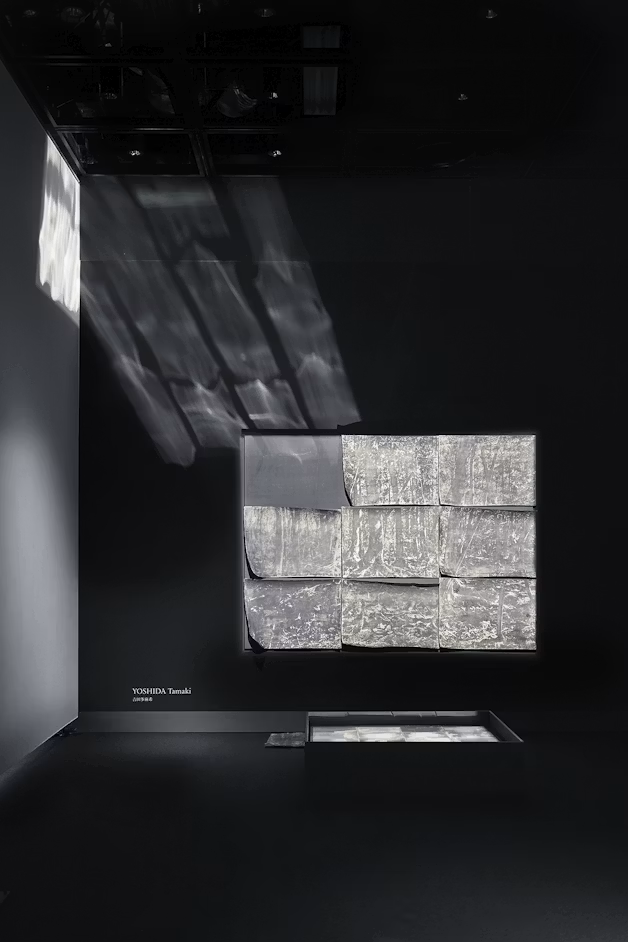
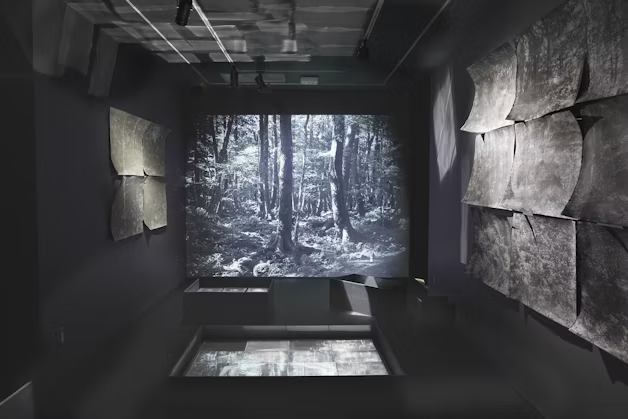
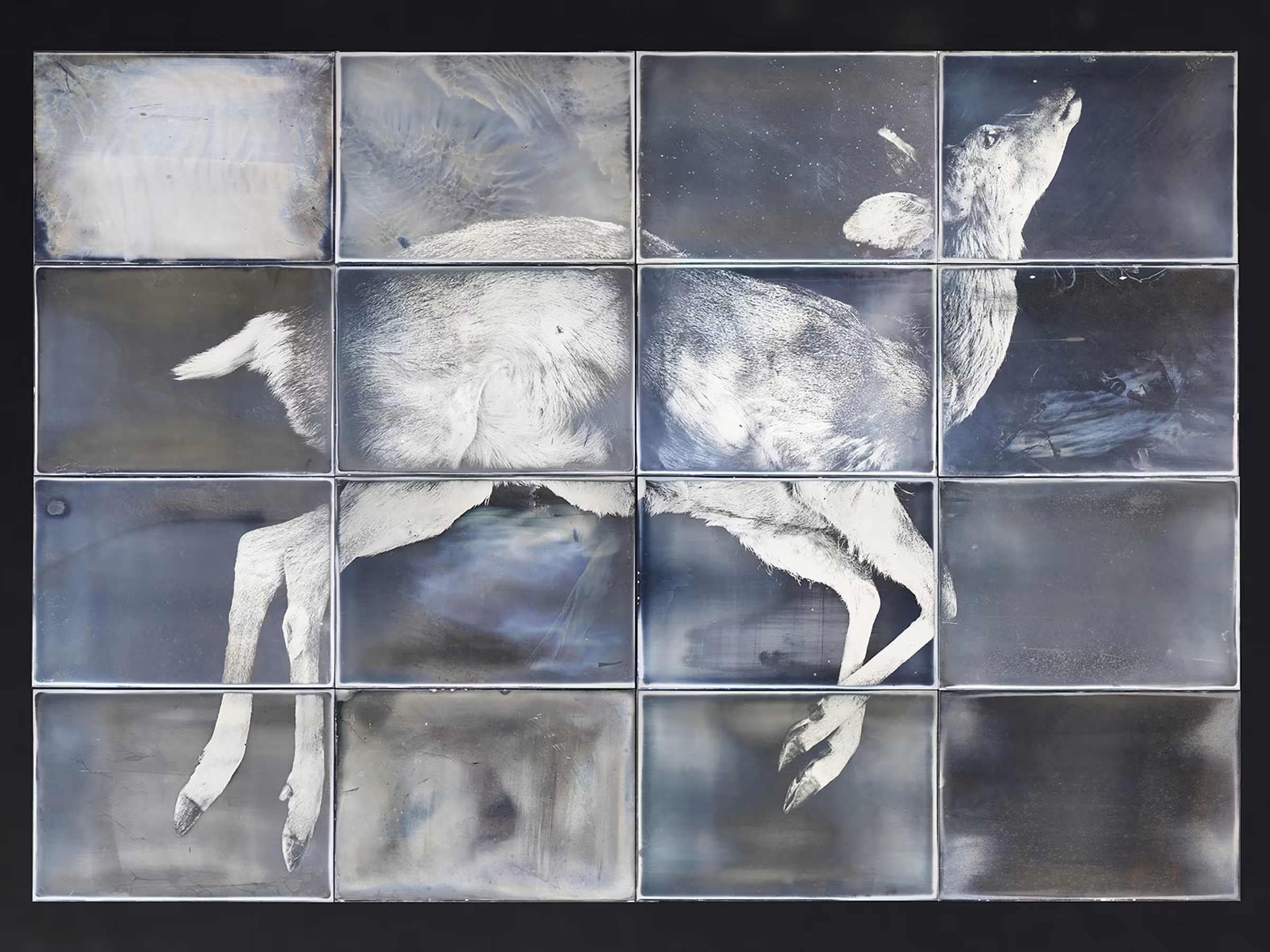
For this exhibition, I contemplated how to convey the rawness and impact of animals that have lost their lives in traffic accidents. First, I created pigments using plants and soil sourced from the habitats where these animals once lived and used the gum print technique to transfer these images onto cotton paper. Additionally, I employed the daguerreotype process—a technique historically used to document deceased individuals—to create nearly life-sized images of roadkill animals on metal plates. This approach also aligns with the concept of “WONDER Mt. FUJI,” which commemorates the 200th anniversary of the invention of photography.
The stark contrast between the inorganic metal plates bearing the images of deceased animals and the organic gum prints of forest landscapes highlights the unnatural severance of these creatures from their ecosystems due to human activity.
About the Exhibition Title “Hinome” (日目)
As this exhibition is a spin-off of “WONDER Mt. FUJI,” its theme is closely tied to Mount Fuji.
During this project, I encountered the Japanese mole species Himizu for the first time. Native to Japan, this mole has degenerated eyes, rendering it blind—hence its name, which can be written as “日不見” (meaning “one who does not see the sun”). Tragically, I found this animal lifeless on the road, a victim of roadkill.
Animals killed by traffic accidents are often ignored, rarely becoming topics of discussion. Through this exhibition, I hope to give these overlooked creatures a moment in the light, which is why I chose the title “Hinome” (日目), meaning “a day in the sun.”